The situation

You already know what needs building. That is not the hard part.

It is on the IT roadmap. For next year.

Nobody disagrees that the system should exist. It is queued behind everything else the internal team owns, and the earliest date anyone will commit to is a long way out. The problem costs you money in the meantime.

The software you bought does not match the job.

Off-the-shelf tools cover the general case. Your team keeps a spreadsheet next to the tool for the part it does not cover, then reconciles the two by hand. That spreadsheet is now load-bearing.

The last build left you with a black box.

A vendor delivered something you cannot open, cannot change and cannot move. Every small adjustment is a quote and a wait, and if they stop answering the phone you have no way to keep it running.

  • Sibanye-Stillwater
  • Tellus
  • Sunshine Marketing Strategies
  • ReadyLife

The work

Messes we have built against.

We do not publish a client's name or their numbers without written permission, so these are the problems rather than the logos. If one of them is the shape of your week, that is the conversation to have.

Vehicle wrap shop

Quotes built in a spreadsheet off gut feel, a schedule living on a whiteboard, and no reliable answer to which vehicles were in the bay right now.

Quoting from real labor and material rates, scheduling by bay, and design proofs with version history so the shop floor works from the approved one.

Repair shop work orders

Work retyped from the counter to the bay to the invoice, job status held in whoever answered the phone, and paperwork that catches up with the job days later.

Work orders that follow the shop's own job stages from intake to invoice, with parts and job history on the order instead of on a clipboard.

Forensic engineering

Case files that have to stay complete and in order, where the documents, photographs and findings for a case are the deliverable.

A case file each piece of work attaches to, so the record for a case stays together in one system.

Software we built that you can open yourself.

provatoauto.com

Management software for auto repair shops. Live.

talkide.app

Our own product. Live, and open to anyone.

bjj.onl

A training diary for jiu-jitsu. We built it and it is live.

trainvr.pro

A virtual reality training platform, including the API behind it.

Who you work with

The two people you meet are the two people accountable for it.

No account manager in between, no handoff to a team you have not met. We scope the work, our engineers build it, and we are the ones who answer the phone afterwards.

We are in Pompano Beach, and so is half our engineering team. The other half is in our Czech office, which means work carries on overnight. If you want us in your building before we scope anything, we can be there this week.

Most of our clients are in Broward and Palm Beach County. We also build for companies in California, Oregon, Georgia and Pennsylvania, so most of the work is remote.

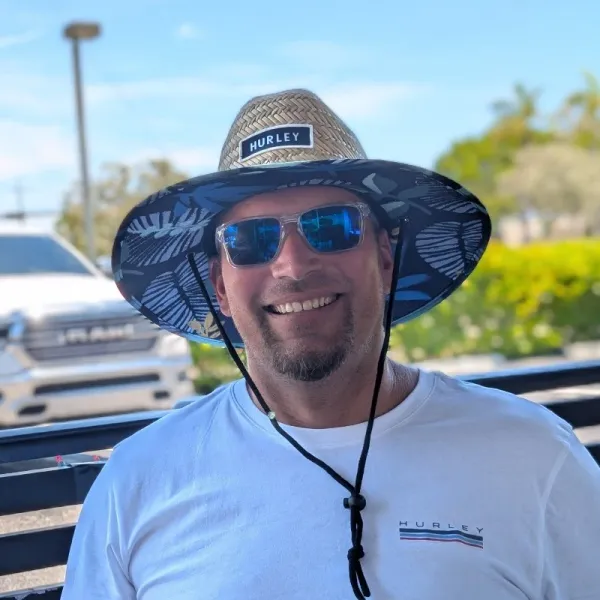
Honza Musil, CTO and co-founder of We Build Software
Honza Musil

CTO and Co-founder

Technical direction and architecture. 20+ years building production software.

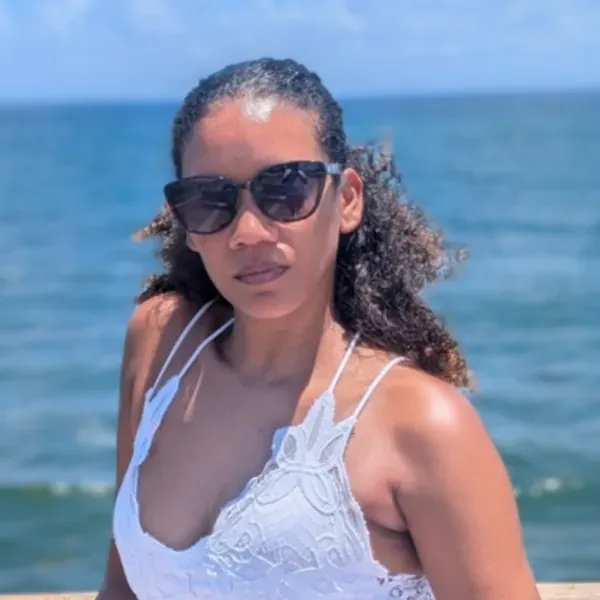
Dominisha Musil, COO and co-founder of We Build Software

Dominisha Musil

COO and Co-founder

Delivery and operations. Keeps scope, schedule and communication straight.

Backed by our engineering team in South Florida and the Czech Republic.

How it works

Three steps, and you know the price before the second one.

The old way, and ours.

1

The call, then discovery

A working prototype, not a document

The Old Way

You write up requirements so somebody can price them, then wait weeks for the estimate.

Our Way

On the call you describe how the job actually runs, the way you would explain it to a new hire, and we draft it live. Discovery turns that draft into a working prototype you can click through, a written scope and a firm price for the build. It is a fixed fee, and it comes off the build if you go ahead.

2

The build

Fixed scope, fixed price, both signed

The Old Way

Work starts on time and materials, and the number keeps moving until it is done.

Our Way

Scope and price are both fixed and both signed before we begin. You approve the draft, we build against it, and the number in the statement of work is the number at the end.

3

The handover

Your repo, your infrastructure

The Old Way

The system stays with the vendor, and every change is a quote and a wait.

Our Way

You get the full source code, backend included, in your repository and running on your infrastructure. Your own team can maintain it. We stay on for support if you want us to.

How we engage

The paperwork your procurement team will ask for.

Signed MSA and SOW

We work under a master services agreement, with the scope and the price of each project written into a statement of work and signed before anything starts.

How we engage

Liability and E&O insurance

We carry general liability and errors and omissions cover. Your procurement team can ask for the certificate and we will send it.

How we engage

Documented security and data handling

How we get access to your systems, what we do with your data and what happens to that access at the end are written down before the project begins.

How we engage

Full IP transfer

The source code and the intellectual property in it transfer to you on delivery. No escrow arrangement, no license back to us, no lock-in.

How we engage

The engine

This is what we build in. You can open it right now.

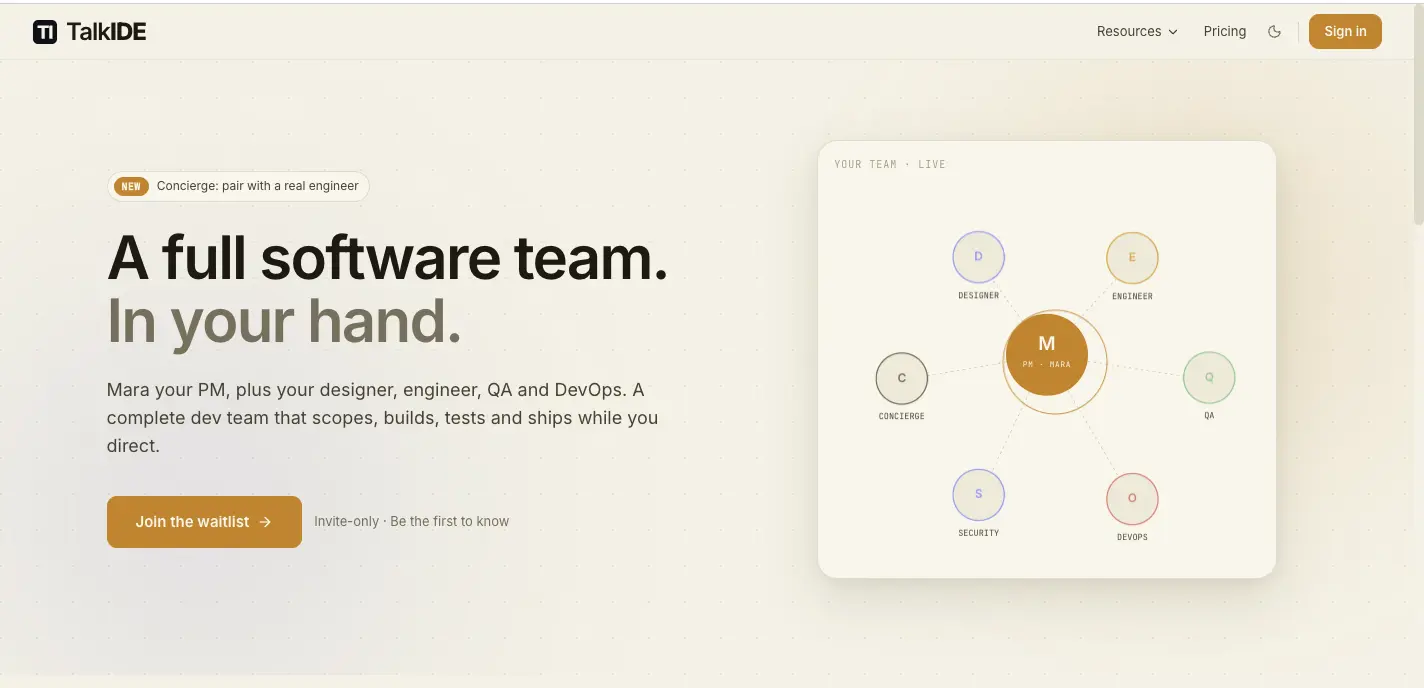
TalkIDE is our own engineering environment. It is not a separate product we are selling you, it is what our team builds every client project in, including yours. It is live, and it is open to anyone.

It is worth being plain about how this sits with the promise at the top of this page. TalkIDE is the tool your software is built in, not a platform it runs on. What you receive is ordinary source code in your own repository, deployed to your own infrastructure, and it keeps running whether or not TalkIDE is in the picture.

You get an account as well when your project ships, pointed at your own code, so you can keep changing the system the same way we built it. That is an option, not a dependency.

TalkIDE turning written requirements into production-grade software

Tell us how the job actually runs.

Book a scoping call. You describe the work and we draft it live, then discovery turns that draft into a working prototype, a written scope and a firm price. Nothing about the build is guesswork by the time you sign, and the source code is yours at the end.